Future Exhibition

Anna Fromchenko: Wishing Well10.06.2026 - 26.12.2026

Future Exhibition

Avishai Platek’s Theater of Nature10.06.2026 - 26.12.2026

Future Exhibition

Sudden Landscapes: The Desert Paintings of Zvi Mairovich10.06.2026 - 26.12.2026
Future Exhibition
Anna Fromchenko: Wishing Well

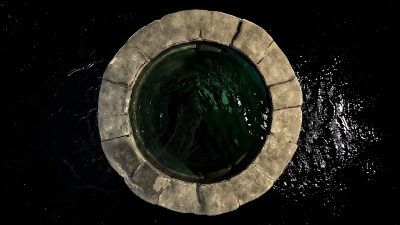
The Negev Museum of Art is honored to present Anna Fromchenko’s exhibition Wishing Well. Fromchenko (b. 1952) is a multidisciplinary artist who combines sculpture, painting, photography, and video. Her practice often involves removing objects from their original context and imbuing them with a new poetic meaning – as seen here. The exhibition is dedicated to the installation Wishing Well – a site-specific work comprising video, sound, and sculpture that opens a well of water in the heart of the exhibition space.

The image of the well, steeped in biblical tradition and rooted in the Land of Israel, marks the confluence of existential necessity and symbolic significance. As a source of water, the well is a source of life, but it also brings to the fore our dependence on nature and the fragility of human existence. Drying, sealing, or poisoning a well poses a real life-and-death threat, especially in the desert. As a deep and hidden space, the well can also become a pit of falling and entrapment, and at the same time represents an inner realm of memory, the subconscious, and hidden psychological layers. This duality has shaped the notion of ​​a “wishing well” that recurs across many cultures – a metaphysical portal of hope, faith, and magic, into which we cast our longings and prayers beyond the visible and the present.

Fromchenko’s Wishing Well sits on the museum floor as a sculptural object. The video footage set among the stones creates the illusion of water rising and falling slowly, to the rhythm of breathing. A stone bench is placed next to the well, inviting visitors to sit, slow down, and linger in the experience. Detaching the well from the context of functional use allows it to serve as a space for reflection: it is no longer a destination for making a wish, but a fraught site where the movement between waxing and waning heightens the tension between hope and loss, and between presence and absence – as one of the lines of the poem whispered in the background echoes: “You cannot see the water / for the water.”

Curator: Ron Bartos
Less
Future Exhibition
Avishai Platek’s Theater of Nature

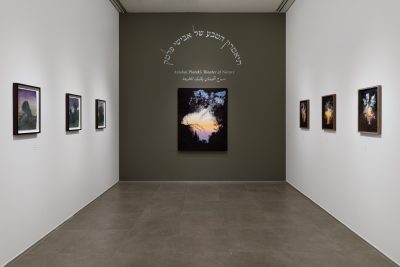
The Negev Museum of Art is honored to present Avishai Platek’s Theater of Nature. In his debut museum show, the artist unfolds a comprehensive view of the local landscape as a theatrical stage, challenging the conventional perception of nature. Avishai Platek (b. 1975, Kibbutz Nahshonim) graduated from Bezalel Academy of Arts and Design, including a period as an exchange student at London’s Central Saint Martins, and from the advanced studies program of HaMidrasha School of Art, Beit Berl College. Platek specializes in painting, drawing, and printmaking, and throughout his diverse career, he has also worked with photography, video, and performance. However, regardless of medium, the local landscape has always been at the heart of his artistic practice. To a large degree, Platek is a landscape painter. And yet, it is important to note that the landscapes in his paintings do not hinge on the horizon but rather offer us close-ups of the landscape. A flower, a shrub, one or a couple of trees, a scarecrow, a wild animal, a structure, a streetlight – these are the main characters in his paintings, as if the landscape were a protagonist, and the artist – a portrait painter. And so, it would be more apt to describe him as “a painter of landscape portraits.” Indeed, by utilizing psychological mechanisms like anthropomorphism and pareidolia, in his generous and stylized paintings, Platek transforms the configurations of nature into human figuration in a series of gestures, glances, and emotional expressions. Imbuing the plant kingdom with a humanlike energy allows for a more intimate relationship between humans and nature (and landscape), conjuring drama that takes shape and plays out in front of us – a “theater of nature.” The individual walks in nature. He knows the mythology of nature; he is familiar with the legacy of ideologies that have been embedded in it (whether disavowing or sharing them); and he knows about the wars, the burdens, and the costs. But the individual who walks in nature also remembers its wonders, reflecting wistfully on the realms of his childhood. Platek’s work touches on our complex and multifaceted relationship with landscape, as well as his personal experiences from recent years between the two peripheries – his home on Kibbutz Kabri, from which he had to evacuate, and the Negev, where the war started – and at the same time, challenges the prevailing perceptions of the local landscape through its personification. Platek creates nature perceived as a subjective, singular, present, vital, and sentient being that responds to a viewer in his image; a theatrical landscape that blends reality (realism) with the fictional (surrealism). The artist does not propose nature as a sanctuary or mere decoration, but as an entity. In Avishai Paltek’s Theater of Nature, there is no neutral backdrop but a living presence that has its own gestures, situations, and states of consciousness. No longer serving as a background – the landscape is a human encounter. Curator: Ron Bartos

Less
Future Exhibition
Sudden Landscapes: The Desert Paintings of Zvi Mairovich

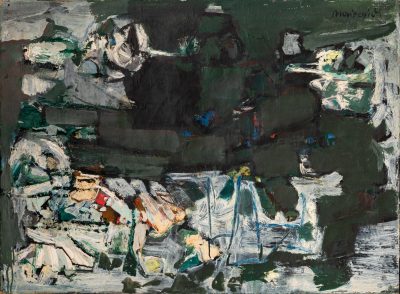
The Negev Museum of Art is honored to present the exhibition Sudden Landscapes, dedicated to the desertscape paintings of the artist Zvi Mairovich (1911–1974) – a member of Ofakim Hadashim and one of the fathers of abstraction in Israel.vi (Hersh) Mairovich (Meirovitch) was born in Korsano, Galicia, into a religious Jewish family, but under the influence of the Haskalah Movement, he abandoned religion in his youth. When he was 18, his father sent him to rabbinical school at the Higher Institute for Jewish Studies in Berlin, but he soon quit the school and took up painting classes under Karl Hoper at the Academy of Fine Arts. In 1934, he fled Nazi Germany and immigrated to Pre-State Israel, where he settled in Haifa and became a part of the local art scene. Mairovich was one of the founders of the Haifa Artists Group, participated in the Painters and Sculptors Association’s shows, won the Dizengoff Prize for Art (1942, 1950, 1961) and the Hermann Struck Prize (1948), participated in the Exhibition of the Eight and the Exhibition of the Seven, and in 1948 co-founded Ofakim Hadashim (“New Horizons”) and was one of the group’s leaders (until his secession in 1959). From then on, Mairovich’s paintings started to shift towards abstraction: figures, still lifes, and landscapes were gradually stripped of their characteristics, and their distinct forms took a back seat to pictorial values ​​and expressive style.

Mairovich’s desertscape paintings, which he dubbed “the landscapes of Sodom,” are widely considered one of the pinnacles of his oeuvre. They were created in the early 1960s, during the artist’s desert visits, mainly in Mitzpe Ramon and the Dead Sea area. Indeed, the features of the place were translated into the color palette of these paintings, which included: red (earth, the rose-red mountains of Edom/to the east), white (salt, wind), ochre-browns (sand, khmasin, light), black (shade), and purples and greens (minerals, oxidized iron).

Here, in front of the primordial views of the desert, Mairovich reached the highest level of abstraction his paintings achieved up to that point, as he described it: “Here I am painting nature. Here, the desire to return to the primal sensation of seeing. Then comes the whirlwind. And the reduction, and a certain something. The cruelty of the restriction stems from the silent persistence of nature. An immutable thing imposes its essence upon it. The landscape of Sodom. A deserted, purplish-red, sudden, incomprehensible landscape. It’s hard to imagine something more primal and more new.”

The experience of the desert and the observation of nature’s presence and absence served Mairovich as a springboard towards a higher level of abstraction than ever before, and no less than that, to realize his desire to merge the universal values ​​of abstract painting with the local values ​​of the place’s features. “I don’t want to exaggerate,” concluded Mairovich: “But then something happens. Something that’s alive takes shape from the living. The canvas takes a life of its own.”

Curator: Ron Bartos


Less
The Negev Museum of Art We use cookies to ensure the website functions properly and improve user experience. You can choose which types of cookies to enable.
Cookie Selection